Mapping the Cosmic Web: Visualizing Dark Matter in Modern Simulations
2026-10-27 · GlobalTech Daily Editorial Desk · Source: science.nasa.gov
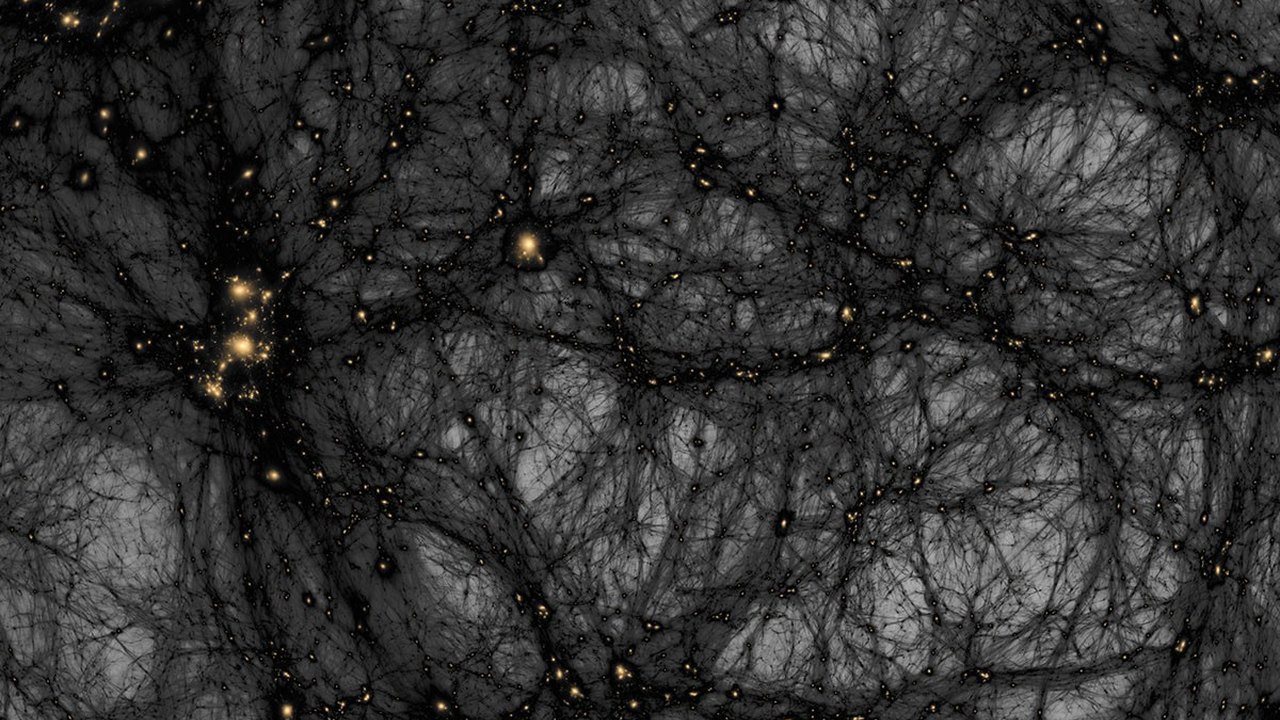
Image source: science.nasa.gov — rights not verified
Visualizing the Unseen
New visualizations derived from computer simulations continue to provide insight into the structure of our universe, illustrating how invisible components dictate the arrangement of visible galaxies. A recent feature from the American Museum of Natural History’s Hayden Planetarium illustrates the distribution of dark matter, showing it as a vast, web-like network of filaments throughout the cosmos.
The Role of Dark Matter
Astronomers rely on the concept of dark matter to explain several fundamental gravitational phenomena that visible matter alone cannot account for. This includes the high-velocity rotation of galaxies, the rapid orbital speeds of galaxy clusters, and the degree to which gravitational lenses deflect light. While dark matter itself remains unseen, simulations such as those presented in the 'Dark Universe' show demonstrate that the distribution of these filaments provides a strong statistical match to current astronomical observations.
Beyond Dark Matter
While dark matter remains a central subject of study, it is no longer considered the most mysterious source of gravity in the universe. Scientists are increasingly focused on dark energy, a form of energy that exerts a repulsive gravitational effect. Unlike the clustered filaments of dark matter, dark energy appears to be a uniform force that is currently driving the accelerated expansion of the entire universe.
How to Verify
Readers interested in exploring these cosmic visualizations can view the simulation details and the accompanying astronomical explanation via NASA's Astronomy Picture of the Day (APOD) archive. Further information on cosmological simulations can be found through official astronomical research portals and planetarium exhibition resources.
Source: https://science.nasa.gov/image-article/apod-2026-october-25-dark-matter-in-a-simulated-universe/
AI-assisted reporting; source claims are attributed and have not been independently verified.