UK launches interest‑free “Warm Home Loans” to help households fund solar panels, batteries and heat pumps
2026-10-27 · GlobalTech Daily Editorial Desk · Source: www.theguardian.com
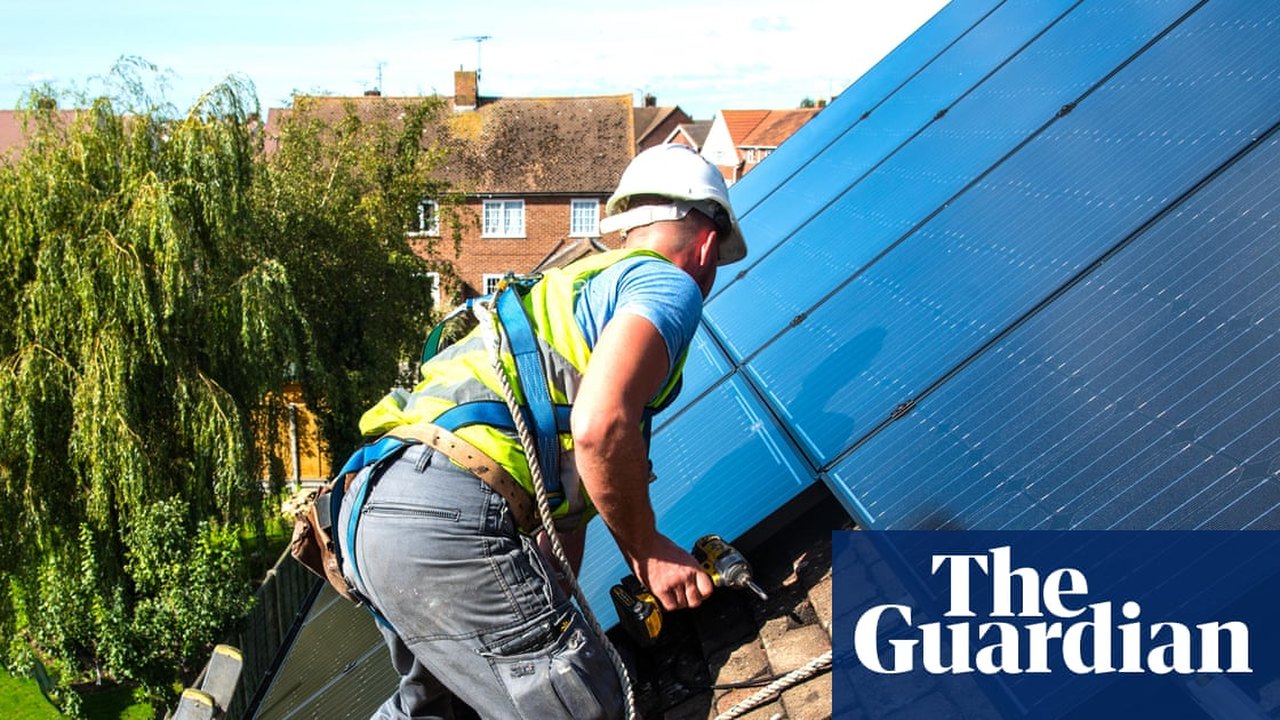
Image source: www.theguardian.com — rights not verified
New financing option for low‑carbon home upgrades
Households across the United Kingdom can now apply for government‑backed loans that carry either no interest or a reduced rate to install solar panels, home batteries and heat‑pump systems. The Warm Home Loans scheme, which opened on 27 October 2026, offers financing from **£7,500 up to £35,000** and is designed to remove the upfront cost barrier that has slowed the uptake of clean‑energy technologies.
How the scheme works
Three energy suppliers – British Gas, E.On and others – have partnered with a range of lenders, including Tandem Bank, Homeserve, HTG Finance, Propensio and several credit unions, to deliver the loans directly to customers. Compared with typical high‑street borrowing, the rates are discounted, and in many cases the loan is interest‑free.
• **Heat‑pump financing** – Up to £10,000 for an air‑source heat pump, or up to £35,000 for a ground‑source unit.
• **Combined packages** – Households can combine a heat pump with a battery and solar panels, potentially saving **£550 per year** on energy bills. Adding a time‑of‑use tariff could raise the saving to **£850 per year**.
• **Government grants** – Existing grants of up to **£9,000 per year** remain for homes not connected to the gas grid, primarily those using heating oil. These can be layered with the loan to cover the full installation cost.
Why the scheme matters now
Rising energy prices have driven a surge in demand for low‑carbon retrofits. The government estimates that the new loan product will enable “**thousands more households**” to adopt clean‑energy solutions and spread repayments over many years, easing the immediate financial pressure on families.
Energy Secretary **Miatta Fahnbulleh** said: “Energy is an everyday essential that must be affordable for everyone. These government‑supported loans will help families across the UK upgrade their homes with no upfront costs to make them warmer and cheaper to run.”
Early evidence of impact
E.On UK chief executive **Chris Norbury** cited a recent trial in Coventry where fuel‑poor customers who added a home battery and a time‑of‑use tariff saved **more than £250 per year** on average. He described the Warm Home Loans as an opportunity to “remove barriers to low‑carbon technologies”.
Uncertainties and future funding
The scheme was announced a day before Chancellor **John Healey**’s first budget, which is expected to scale back the heat‑pump grant component of the broader Boiler Upgrade Scheme. While the grant programme is not slated for complete removal, Treasury officials plan to cut **hundreds of millions of pounds** from its £2.7 billion five‑year budget, arguing that the subsidies have primarily benefited middle‑class households.
Stakeholders will be watching how the reduced grant levels interact with the loan scheme. If grant funding shrinks, the reliance on low‑interest borrowing could increase, potentially affecting the overall affordability calculation for some households.
How readers can verify and apply
• **Official announcement** – The Guardian’s report (https://www.theguardian.com/environment/2026/oct/27/homes-across-uk-to-get-low--or-no-interest-loans-to-fund-solar-panels-and-heat-pumps) provides the primary source.
• **Government portal** – Details of the Warm Home Loans, eligibility criteria and application steps are published on the UK Department for Business, Energy & Industrial Strategy (BEIS) website.
• **Energy suppliers** – British Gas, E.On and other participating utilities have dedicated pages outlining the loan products and contact information for prospective borrowers.
Potential borrowers should compare the loan terms offered by the participating lenders, confirm the total cost of the desired technology package, and check whether they also qualify for the remaining grant funding. By doing so, households can calculate the net upfront cost (often zero) and the projected annual savings, ensuring the investment aligns with their long‑term energy budget.
--- *This article is based on verified statements from UK government officials and energy‑sector executives as reported by The Guardian on 27 October 2026.*
AI-assisted reporting; source claims are attributed and have not been independently verified.