Rosebank Oil Field: Engineering Feat at the Center of UK Energy Policy
· GlobeWire Daily Business Desk · Source: www.bbc.co.uk
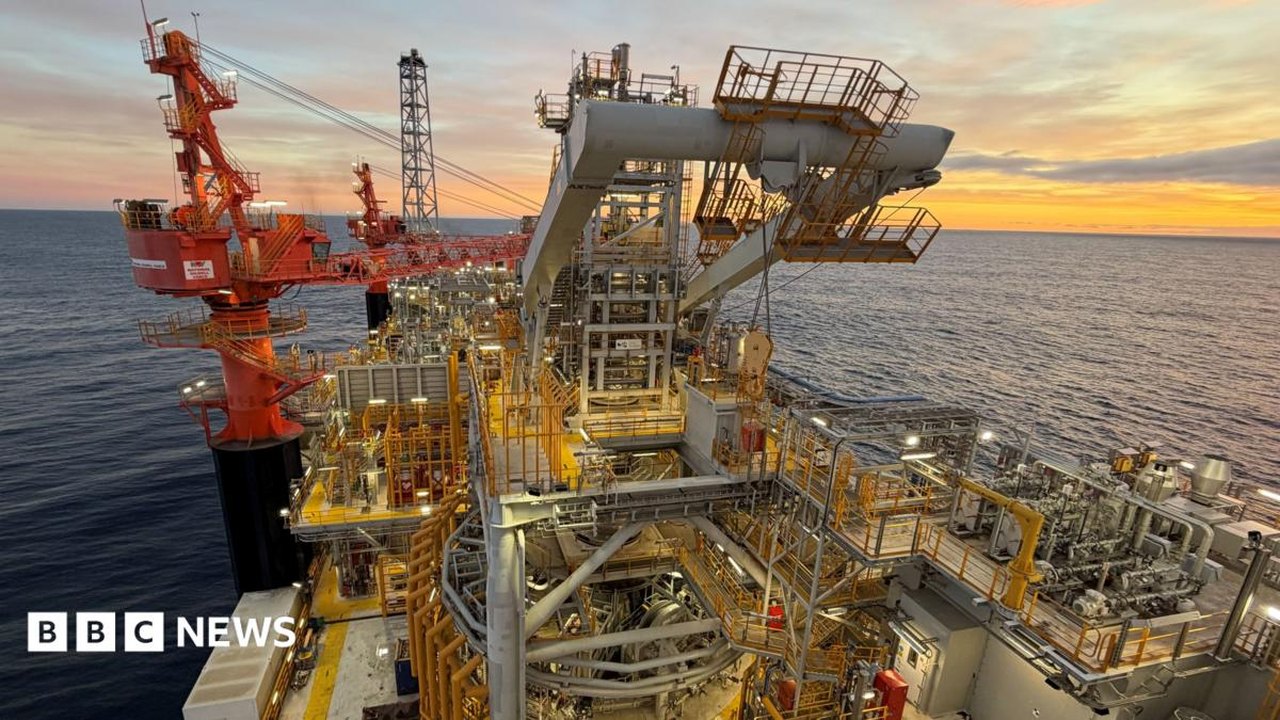
Image source: www.bbc.co.uk — rights not verified
Life on the North Atlantic
Situated 80 miles north-west of the Shetland Islands, the *Petrojarl Rosebank* serves as a floating hub for the Rosebank oil field. Unlike fixed platforms, this vessel acts as a floating production, storage and offloading unit (FPSO). Operating in what industry experts describe as some of the harshest maritime conditions globally, the vessel is home to 122 workers who operate on two-week rotations. For these employees, life offshore involves extreme environmental conditions, including severe swells, alongside modern amenities like gyms and high-quality catering, all maintained to support the operation of the field.
The Political and Legal Impasse
Rosebank has become a flashpoint in the UK’s transition to renewable energy. Originally approved in 2023 under the previous Conservative government, the project faced a significant legal setback in 2025. Following a challenge by campaign groups Greenpeace and Uplift, the Court of Session in Edinburgh ruled the development’s approval unlawful. The court determined that regulators had failed to adequately assess the climate impact of burning the fossil fuels extracted from the site.
Developers are currently providing updated environmental assessments to satisfy government regulators. Meanwhile, the UK government is expected to issue a final decision regarding production authorization before the end of the year.
Economic and Environmental Perspectives
The Rosebank field contains an estimated 300 to 500 million barrels of oil. Proponents, including industry representatives from Adura—a joint venture between Shell and Equinor—argue that the project is essential for energy security, noting that recovered gas could potentially heat 500,000 British homes at peak production. Supporters also highlight the significant tax revenue the project could generate for the Treasury.
Conversely, environmental advocates argue that new oil and gas developments are fundamentally incompatible with the UK’s climate goals. Campaigners contend that the industry is in a state of long-term decline and that investment should be prioritized for renewables rather than fossil fuel extraction, which they claim would exacerbate the impacts of climate change while primarily benefiting highly profitable corporations.
Current Status and Reader Verification
The future of the project remains contingent on the upcoming government ruling. Workers onboard the *Petrojarl Rosebank* are currently maintaining the vessel as they await a decision that will dictate the operational future of the site and, for many, their long-term employment stability. Readers interested in the official government stance and further reporting on the legislative process can monitor the BBC News coverage of the ongoing energy policy debate.
Source: https://www.bbc.co.uk/news/articles/cqy8ljkle97ro
AI-assisted reporting; source claims are attributed and have not been independently verified.
More to read
 The Hidden Trap of High-Income Financial Fragility: Why More Money Doesn't Always Mean Security
 China Records Demographic Shift as Elderly Dependency Outpaces Youth
 The search for silence: Why delivery drones are creating a noise controversy
 Apple Addresses Initial Screen Defects in New iPhone Duo Foldable
Latest stories
 Ultraviolette Unveils X-47 Venom: A Shift Toward the Modular VX 100 Platform
 Samsung P9 MicroSD Express Cards See Pre-Black Friday Discounts for Nintendo Switch 2 Users
 Understanding How Guardian Labs Labels Funded Content
 Slovenia Mourns Disappearance of Triglav Glacier After Record-Breaking Summer
 The Rising Cost of Death: Why Families Are Turning to Informal Send-offs